Mugwort (Weed)
Description
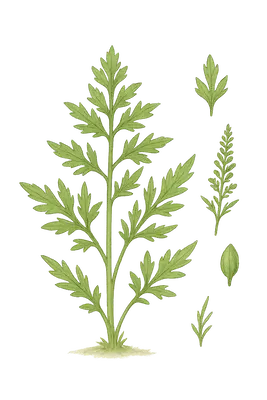
Mugwort (Artemisia vulgaris) is a perennial plant in the Asteraceae (daisy) family. It’s common across temperate regions of Europe, Asia, and North America, thriving in waste areas, roadsides, fields, and disturbed soils. The plant grows 1.5 to 8 feet tall, with aromatic gray-green leaves that are deeply lobed with silvery undersides. Mugwort has been used traditionally in herbal medicine and cooking, and has a strong, sage-like scent.
Allergy Symptoms
Mugwort pollen causes:
- Sneezing and runny or congested nose
- Itchy, watery, red eyes
- Coughing and throat irritation
- Asthma flare-ups and wheezing
Mugwort is one of the most significant allergenic weeds in Europe. Oral Allergy Syndrome (OAS) is common — you may get itching in your mouth and throat from celery, carrots, fennel, parsley, coriander, sunflower seeds, bell peppers, and spices like mustard and pepper. This combination is sometimes called “celery-mugwort-spice syndrome.”
Typical Pollination Period
Mugwort pollinates from late summer to early autumn:
- United States: July to October, peaking in September
- Europe: June to September, peaking in August
- Timing varies by latitude and local climate
Geographic Distribution
Mugwort grows widely in temperate regions:
- Europe: Common throughout, from the Mediterranean to Scandinavia
- Asia: Found across temperate regions including China, Japan, and Korea
- North America: Throughout the continent, especially common in the western US (California, Oregon, Washington, Idaho, Nevada)
- Considered invasive in some areas
Tips for Allergy Sufferers
- Check pollen forecasts and limit time outdoors when counts are high
- Keep windows closed and use HEPA air purifiers
- Shower and change clothes after being outside
- Antihistamines or nasal corticosteroids can help — ask your doctor
- If you get OAS, watch out for celery, carrots, and spices
- Remove any mugwort plants growing near your home
- For persistent symptoms, consider allergy testing or immunotherapy