Ragweed (Weed)
Description
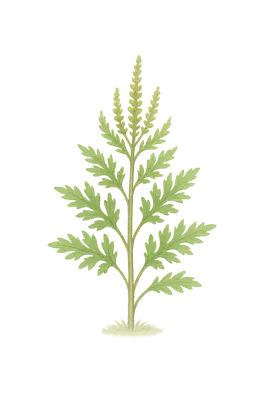
Ragweed (Ambrosia species) is an annual or perennial plant in the Asteraceae (daisy) family. About 50 species exist, with 17 in North America. Common ragweed (Ambrosia artemisiifolia) causes the most allergy problems. These plants grow in fields, roadsides, riverbanks, and disturbed soils, reaching 1 to 6 feet tall with deeply lobed, fern-like leaves. Ragweed produces massive amounts of lightweight pollen — a single plant can release up to one billion grains in a season — making it one of the worst offenders for fall allergies.
Allergy Symptoms
Ragweed pollen is a potent allergen that causes:
- Sneezing and runny or congested nose
- Itchy, watery, red eyes
- Coughing and throat irritation
- Asthma flare-ups and wheezing
- Skin rashes in some people, lasting two to three weeks
The lightweight pollen can travel hundreds of miles on wind currents. Oral Allergy Syndrome (OAS) is common with ragweed allergies — you may notice itching in your mouth and throat after eating bananas, melons (watermelon, cantaloupe, honeydew), zucchini, cucumber, or sunflower seeds.
Typical Pollination Period
Ragweed pollinates from late summer through fall:
- United States: August to November, peaking in mid-September
- Europe: Similar timing, though less common; its range is expanding with climate change
- Ragweed keeps releasing pollen until the first hard frost
Geographic Distribution
Ragweed grows in various regions:
- North America: Widespread across the United States and Canada, especially common in the Midwest and Eastern states
- Europe: Originally introduced accidentally, now spreading in Central and Southern Europe — particularly Hungary, Italy, and France
- Australia: Introduced and found in some regions
Tips for Allergy Sufferers
- Check pollen forecasts and limit time outdoors when counts are high, especially mid-morning when pollen release peaks
- Keep windows closed and use HEPA air purifiers
- Shower and change clothes after being outside
- Antihistamines or nasal corticosteroids can help — ask your doctor
- If you get OAS, watch out for melons, bananas, and zucchini
- Pull up any ragweed plants near your home before they flower
- For severe symptoms, consider allergy testing or immunotherapy